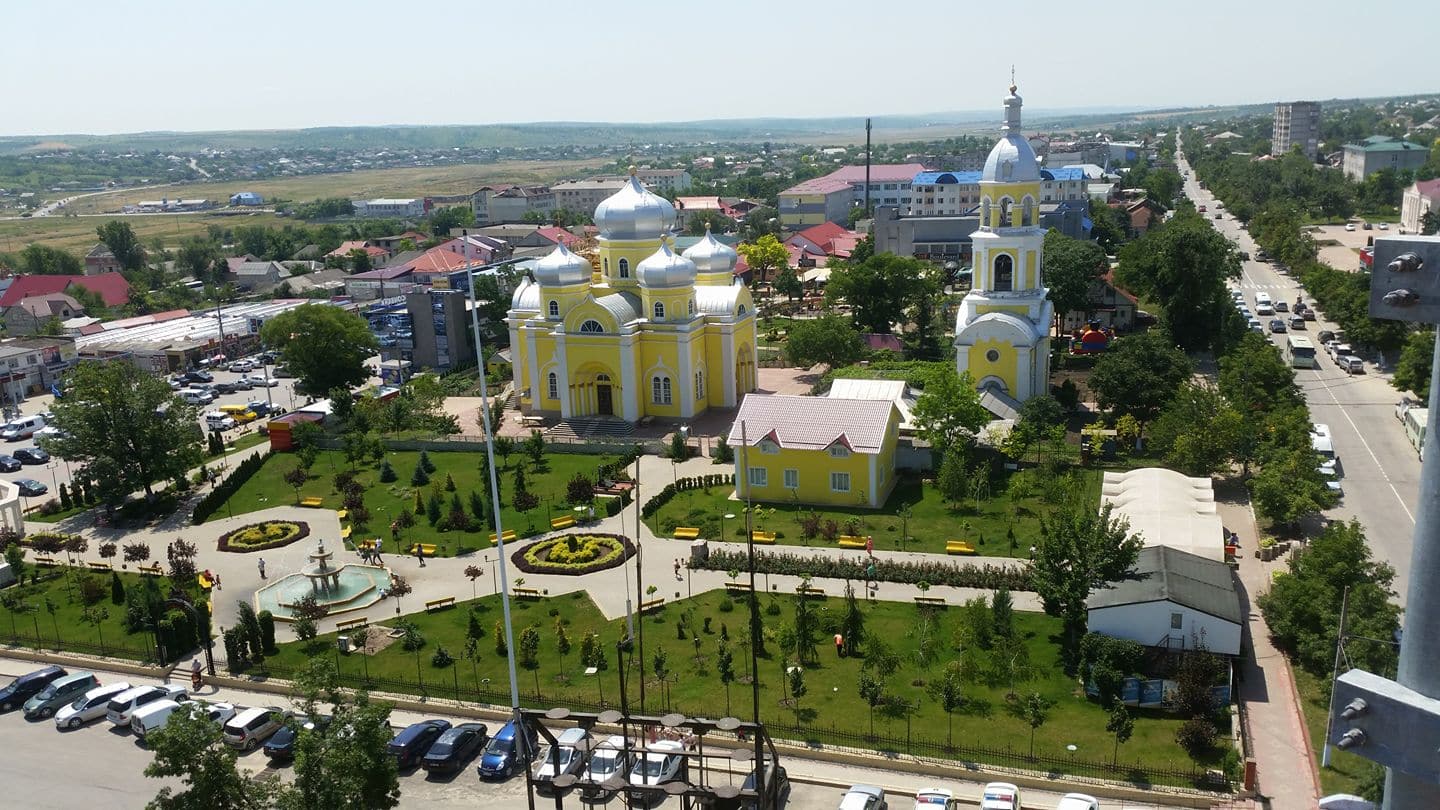
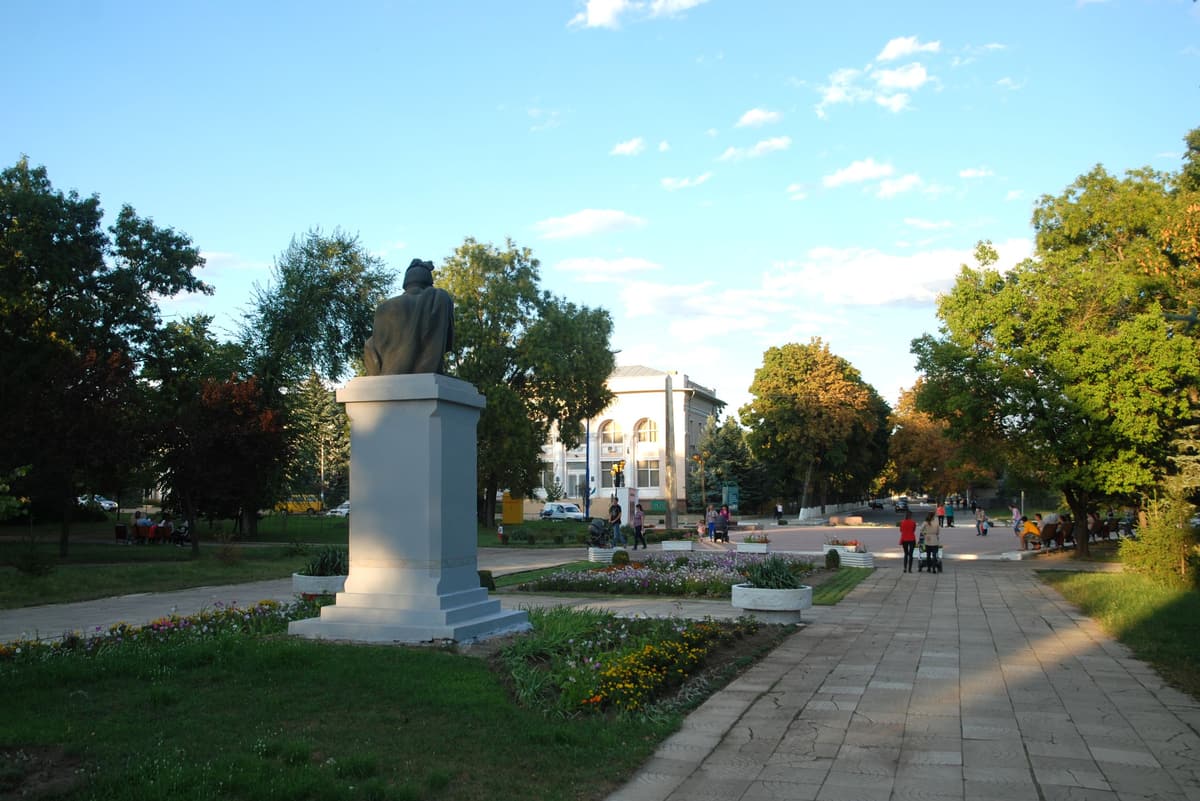
Cahul is the largest town of Moldova’s far south, set near the Prut river and the Romanian border, about 75 km south-west of Comrat. It is known across the country for its mineral-water sanatorium and has a pleasant centre of parks, a white cathedral and a university.
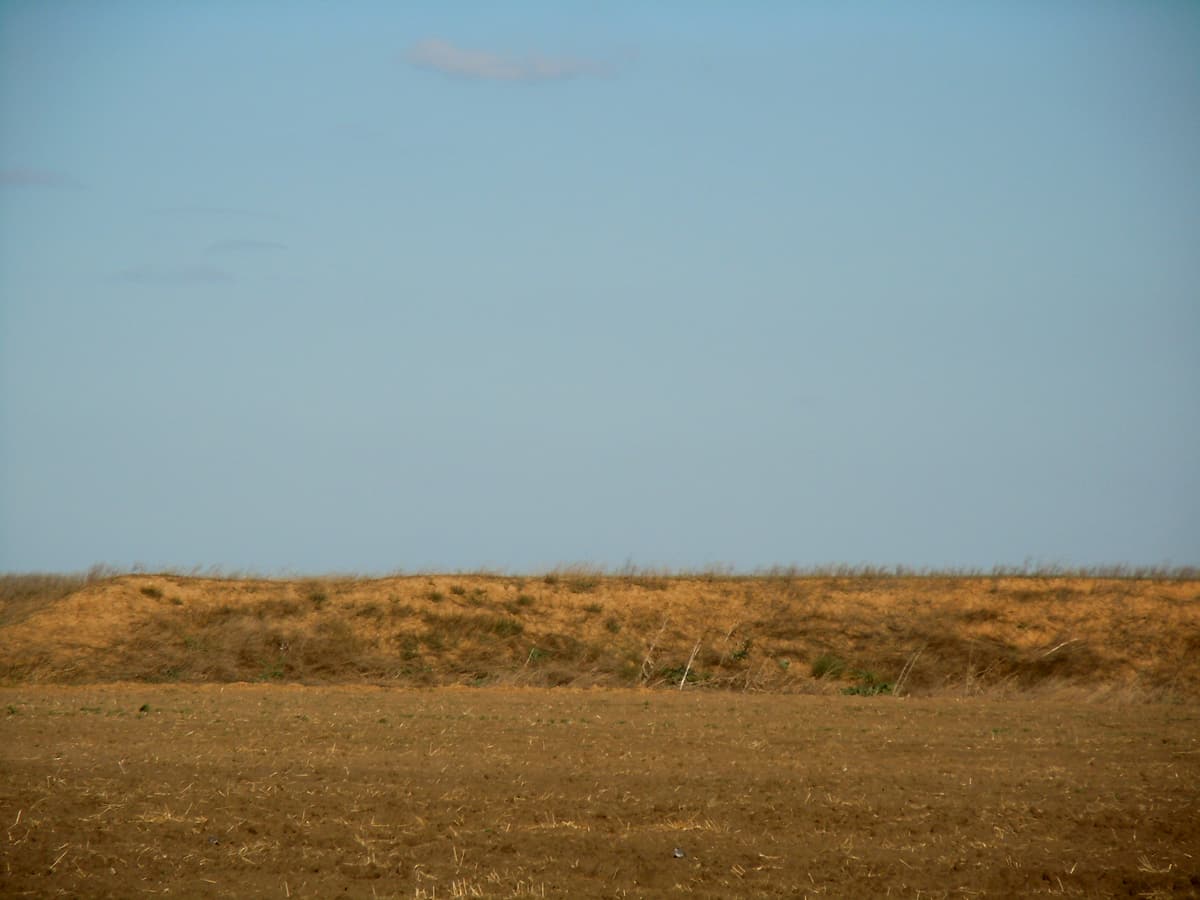
East and south of the town, an ancient earth rampart known as Trajan’s Wall crosses the steppe. Its builders and date are still debated — Roman, late Roman or early medieval — and it has given its name to the whole southern wine region, Valul lui Traian.
Neither is a headline attraction, but together with Vulcănești they make a satisfying extension to Gagauzia for travellers with a car and an extra day.
Top things to do: Cahul & Trajan’s Wall
Cahul town centre
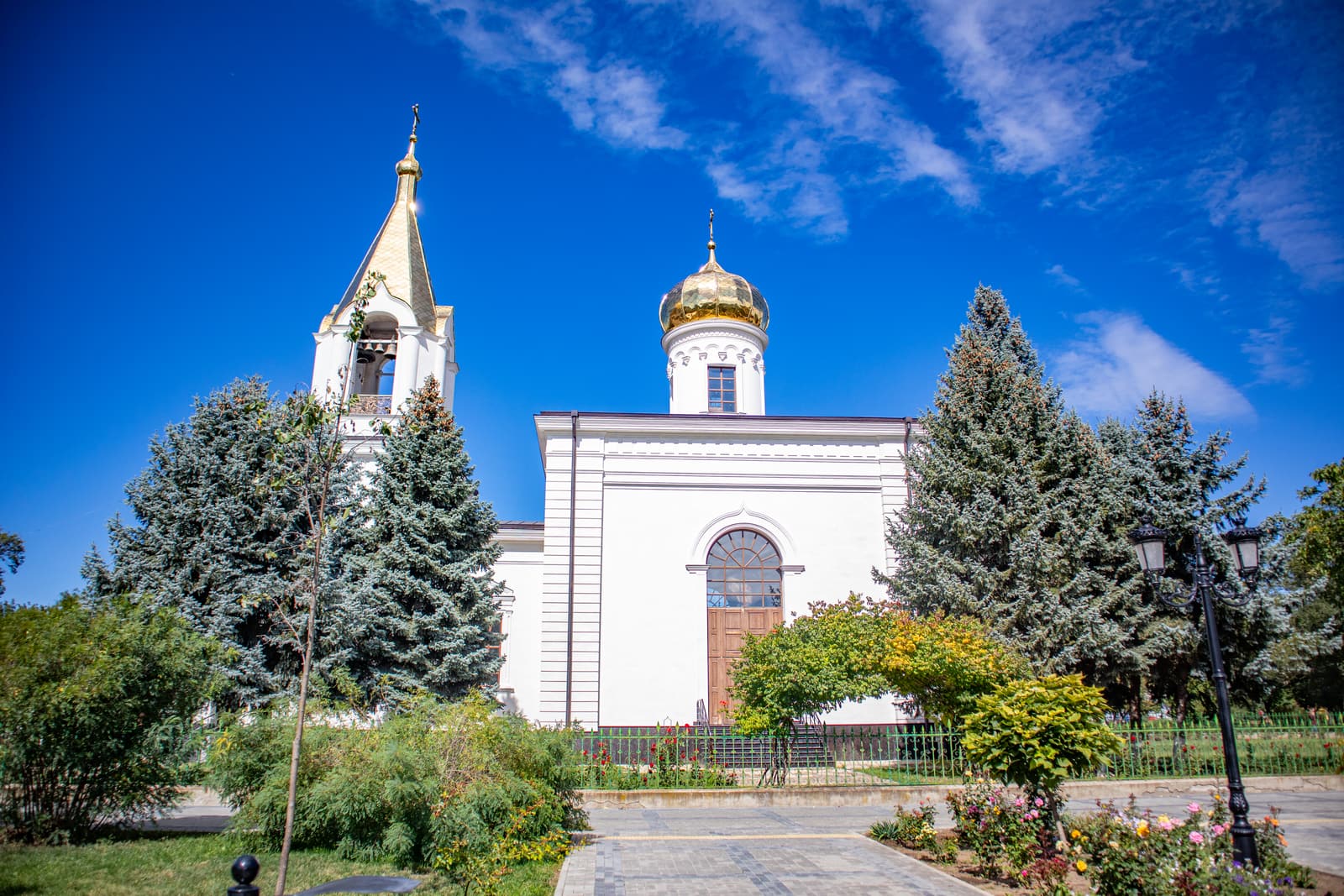
Walk the main street and central park to the Cathedral of St Michael, with its white walls and golden dome, and browse the market.
Mineral-water spa
The Nufărul Alb sanatorium uses warm mineral water from deep wells for treatments. Day access and treatments are sometimes available — ask on the spot.
Trajan’s Wall
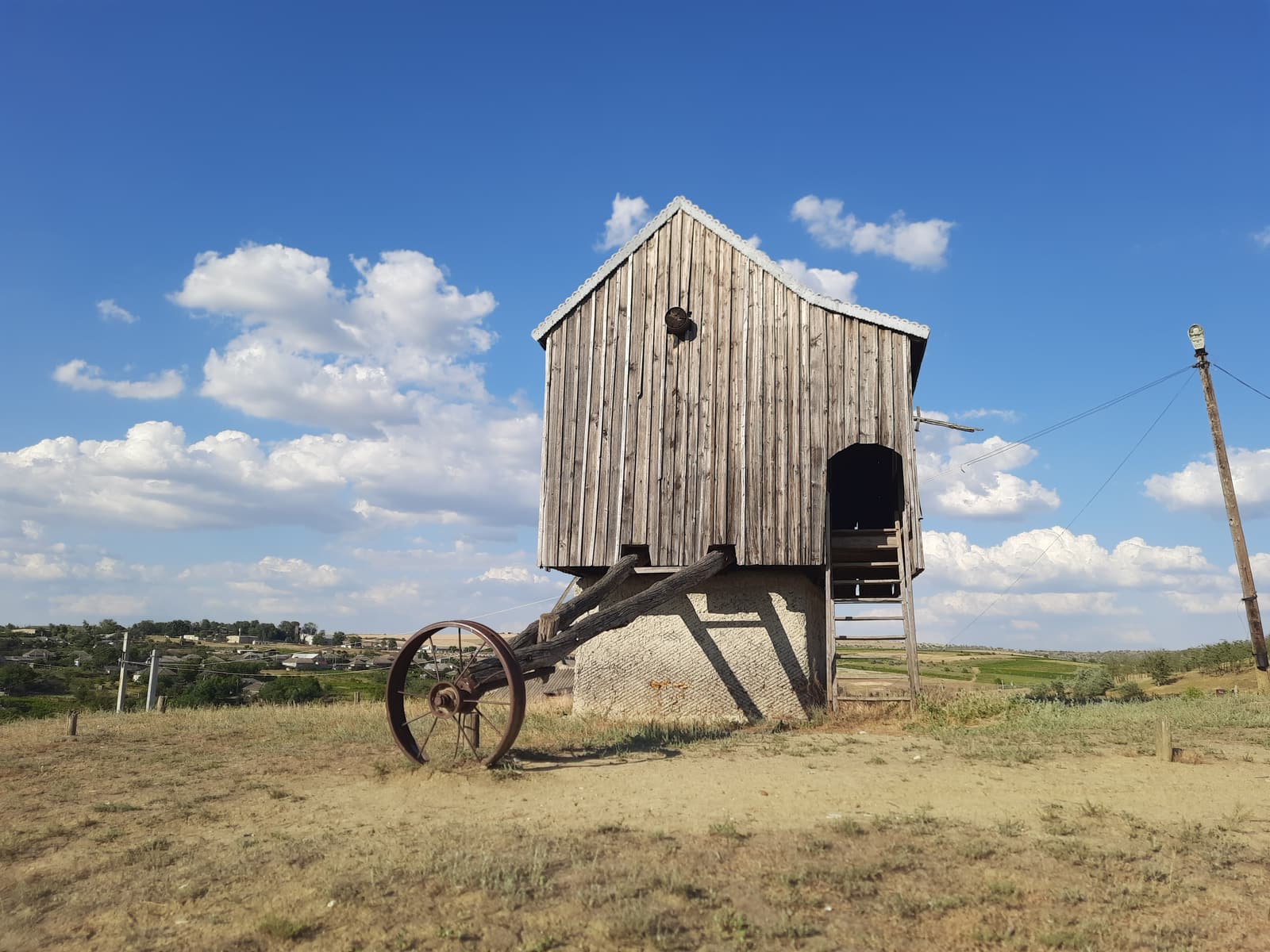
The Lower Trajan’s Wall begins near the Prut at Vadul lui Isac, south of Cahul, and runs east towards Vulcănești and on into Ukraine. Short sections of bank and ditch survive; a local guide or good map is needed to find them.
Lower Prut landscapes
South of Cahul the Prut valley widens into lakes and wetlands rich in birdlife, protected in part as a nature reserve.
How to get to Cahul & Trajan’s Wall
- Buses run from Chișinău’s Southern Bus Station to Cahul in around 3–3.5 hours, and marshrutkas link Cahul with Comrat and Vulcănești.
- By car, Cahul is about 75 km from Comrat and 35 km from Vulcănești.
Insider tips
- Cahul has more hotels and restaurants than any Gagauz town — a useful overnight stop in the far south.
- The area borders Romania and lies close to Ukraine. For onward travel into Ukraine, including Bolgrad and the Odesa region, check your government’s current war-related travel advisories; we do not recommend or cover such trips.
- Do not expect a dramatic monument at Trajan’s Wall — its interest lies in its length and mystery.